



















Should students go to school at the risk of their health? Some feel like they have to. Being stressed about school is nothing new, but calling out sick seems to be on the decline.
There have been many studies talking about the rise of absenteeism, specifically after the COVID pandemic. However, it seems that students at St. Stephen’s and St. Agnes might be dealing with the opposite problem.
In a form that garnered 86 responses, 79.1% of students listed themselves on a scale of 1-5 as extremely or very stressed (4 and 5) if they miss school. It’s understandable; assignments and missed tests can easily pile up, and organizing times to meet with teachers can leave little time to make up work.
However, there is a much more alarming result from the form: 59.3% of students reported that they were likely or very likely to still go to school even if they felt sick. This trend seems to suggest that students are putting their own health and the health of others at risk in order to not fall behind. This could potentially be dangerous for the SSSAS community, given that people who are contagious are pushing through to go to school. When reached by email for comment, SSSAS director of health services Dr. Stanton expressed this potential danger saying: “The other thing that students need to consider is the community. When they come to school sick, they are now infecting their peers and people in the community, which can lead to wider outbreaks. The best way to keep ourselves and our community healthy is to stay home when sick, have good hand hygiene, cover coughs and sneezes, stay hydrated, and get enough sleep. With flu and respiratory virus season approaching, these habits make a real difference in keeping everyone safe.”
While going to school sick could unintentionally impact others, it is also understandable why students feel like they are unable to stay home. The data of the form shows that students are incredibly stressed when they miss school, and the amount of 4s and 5s on the scale suggests that the more stressed a student is, the more likely they are to continue going to school when sick.
Mr. Mallett, the head of the upper school, expressed that while many students are stressed, it can also depend on their schedules. He stated: “our kids are really high achievers and they’re motivated and they want to take the hardest classes a lot of the time; and so it’s interesting when the idea of stress may have a negative impact on my health, and I’m stressed because I have all these high academic expectations.”
Students in interviews talked about their stress as well. Kaelyn Stewart ‘29 says that she “always dreads being sick or missing school, because [she] feels like when [she] comes back the work all piles up.” She also added that she worried about getting all of her missed work done on time. Another student mentioned that she never feels like she can be sick for more than one day, or else she gets too far behind.
Mr. Mallett addressed this problem by referring to the schedule, emphasising that “even if you miss two days of school because you are really sick, you’re going to miss one of each class… I think other school’s schedules are such that there’s 6 or 7 classes a day, which can be a bit more problematic
Kaelyn also mentioned that she does not feel like she has time to rest when she does stay home. This comment is reflected in the form results as well, with around 70% of students saying that they did not rest when staying home from school. Many added comments that they felt like they needed to do homework. Dr. Stanton stated that she understands the stress, but also maintains that “sleep is one of the most important things you can do to help your body recover from illness, and it also helps prevent getting sick in the first place.”
Another student, Téa Cragin-Padilla ‘29, reiterated this sentiment saying that she tries to spend as much time as possible doing work when she is home sick. Other responses to the form revealed that some students try to split their time between working and resting, but sometimes this balance can get upset by extreme amounts of work
Téa also stated that “if you miss two classes, you don’t have enough time to see both teachers during a study hall and get all of the information you need from the class.” She also mentioned that when she was suffering from a concussion, she was exempt from tests but still chose to take them because she was worried about being able to make them up later.
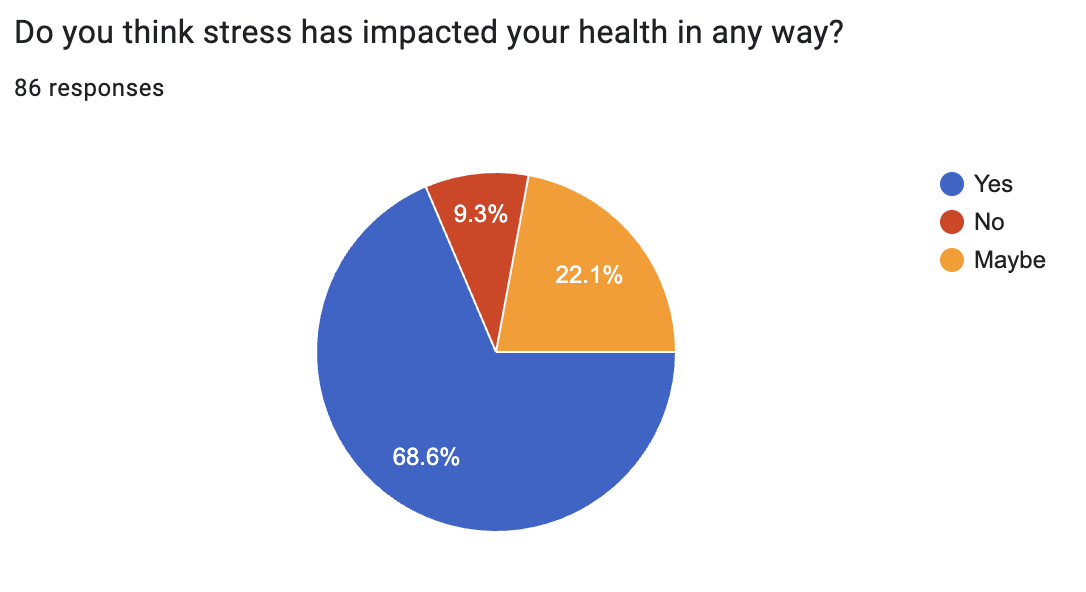
Many students also feel like this stress has in fact impacted their health: 68.6% of the responses answered that they believed stress had negatively impacted their health. These 59 people allege that they are suffering because of school work related stress. Dr. Stanton confirmed that mental and physical health have a link. She stated that “when stress is high, it can weaken the immune system, making it harder for the body to fight off illnesses. Stress also affects mental and emotional health, increasing the risk of anxiety, mood, and burnout. It can also lead to other issues, such as an increase in unhealthy habits like skipping meals, increased intake of caffeine, making poor decisions, etc. High stress levels can make it harder to fall asleep and stay asleep, leading to fewer hours of rest and a lower quality of sleep overall. Poor sleep then makes stress and health worse, which makes you more susceptible to illness and injury.”
Some students argue that teachers could be more supportive of students in order to reduce this stress. Brooke Schiffer ‘29 said that “it’s kind of hard to plan with my teachers, especially since they all have really busy moving schedules.” While schedules can’t be changed, other things can be. Brooke offered that teachers could be more flexible if students miss school due to illness, and Téa agreed, stating: “some teachers are better than others. Some respond to your email right away and plan with you how to make up work, but others don’t even respond to emails and you have to go find them.”
With students feeling like they can’t miss school, and stress breaking down their immune systems, the amount of sick students in the hallway could be more than you think.