






















I twindle the ends of my hair as I look back at myself in the mirror, slowly inching closer to the glass to get a better look at my dead ends. I decide I’ve had enough of my split tips and switch my attention to my phone. Instinctively, I pull up instagram and dive into a deep analysis of my feed – as one does. Right…?
But then it hits me…
Am I seriously spending this much time looking at pictures of myself? How many better things could I spend my time doing?
Mirrors, cameras, and cellphones are all things humans created. Before their existence, you could only see your reflection in an abnormally clear pond. Today, teenagers take around 6-14 selfies a day – the general number across numerous studies.
St. Stephen’s & St. Agnes sophomore Charlie Cutler says she probably takes around 150 selfies a day – across Snapchats, photos, and things she posts on her story. She also adds that she typically looks at her own Instagram feed three times a day. SSSAS sophomore Charlotte Beauregard echoed Charlie’s point by recounting how often she looks at her own TikTok drafts, often overanalyzing her looks.
On paper, these numbers may look diabolical, even shocking myself. But once I thought about it, I realized how “normal” it is for people to obsess over their appearance, and how we don’t even recognize the problem in our generation.
According to a study by the Today Show in 2014, teenagers spend 7.7 hours per week on their appearance, perhaps spent doing makeup, looking in the mirror, or looking at pictures of themselves.
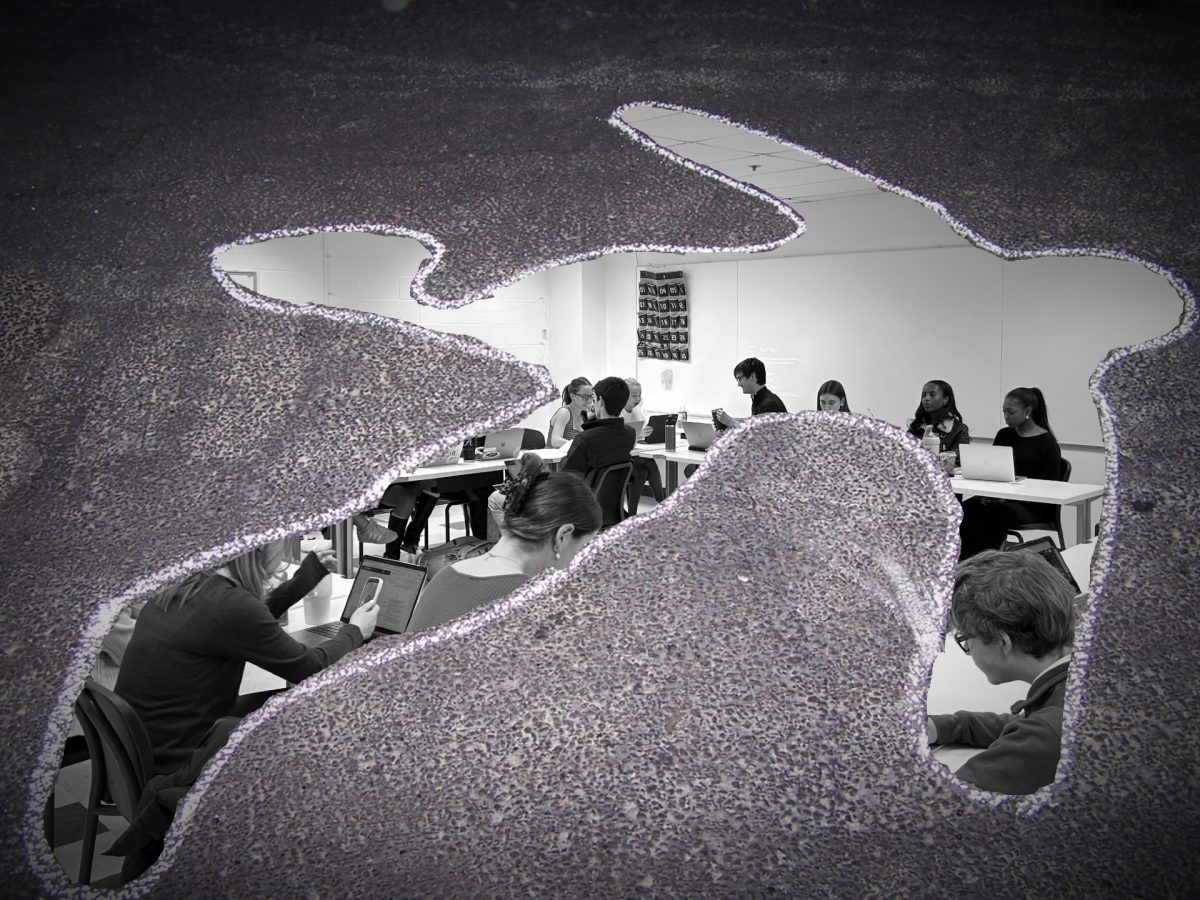
In an anonymous form sent to the Upper School at SSSAS, students were asked on a scale of 1-5, with 1 being a low and 5 being a high, how much they focus on their appearance. 44.7 percent of 38 respondents put themselves at a 4, and a majority of the remaining respondents rated themselves a 3 or 5. When asked whether they found themselves upset over their appearance, some students said no, but many admitted to dwelling on it. Many mentioned that comparing themselves to others, mostly online, adds fuel to the fire. One respondent replied, “Yes, because there’s always videos online of girls with perfect bodies and I compare myself because I don’t look like that.”
Nora McDonough, a senior at SSSAS, says, “Especially when you’re a girl, you’re taught to look at your appearance all the time, to pay a lot of attention to it. So I think it’s important to really internalize that you’re so much more than your appearance.”
Nora says that this focus on appearance begins at a young age. She explains how beauty standards are highlighted in TV shows; as an example, the character who is portrayed as “ugly” gets teased and doesn’t get attention from boys like the “pretty” characters do. These archetypes instill beauty standards in young children’s minds, and phones only further exacerbate the problem.
When Nora was asked how much she looked at her own Instagram, she responded, “Oh, all the time!” She added that she also looks through her own reposts and photos she’s tagged in, to which I enthusiastically agreed. She builds on this idea by saying, “I feel like it’s a natural thing, like you want to know how other people perceive you.” When asked how this process makes her feel, she says it depends on which picture she’s looking at – sometimes she can look at a picture and say, “Oh, I love that picture of myself,” and other times she sounds more like, “What am I doing there? Why am I posing like that?” However, she says it’s important to remember that “No one nitpicks your pictures the way you nitpick your pictures. I don’t think I’ve ever looked at a picture of someone on instagram and thought ‘Oh that’s a disgusting picture of them,’ because you just don’t think like that.” Because phones are so accessible, it is easy to get stuck in a cycle of being too hard on yourself. In spite of that, Nora finishes the interview by emphasizing how many better and more interesting parts there are to yourself than your appearance.
When the topic of online comparison arises, the conversation typically revolves around females. However, it’s not only females who are adversely affected by social media. Recently, many boys’ ears have perked up at the word “looksmaxxing,” an internet-driven trend focused on maximizing physical appearance through diet, exercise, styling, and sometimes extreme procedures. SSSAS sophomore Lehner Doyle says that although he and many of his friends aren’t affected by it, he thinks it’s stupid how people “take hammers to hit their jawline” in an effort to achieve a better aesthetic. He says that he believes that eating better and working out are both healthy ways to better your appearance, but that some crazy methods and certain supplements are “unhealthy” and “just ways to sell you stuff.”
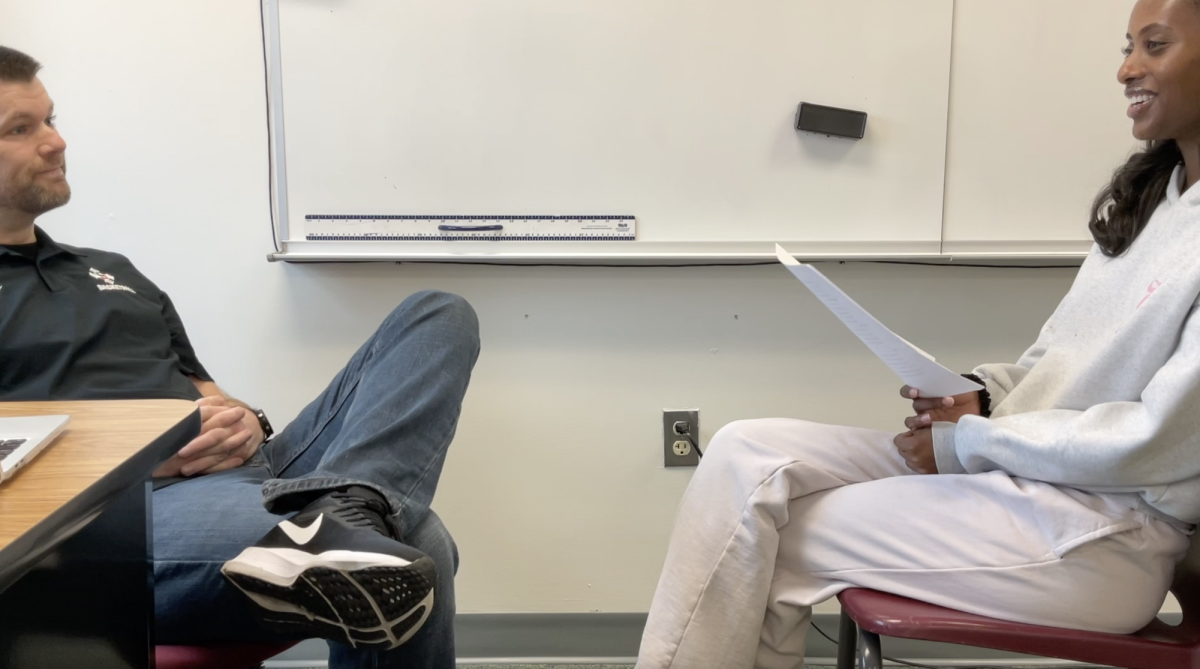
Mrs. Harrison, Associate Director of Counseling and Upper School Counselor at SSSAS, says “In the 80’s and 90’s eating disorders mainly affected girls and women; patients at eating disorder treatment facilities were 95% female. Now, because of social media and the pressures that come with it, the number of males in treatment has increased so much that now approximately 30% of those in a treatment facility are male.” She stresses that content on social media that obsesses over body type and appearance has brought about a major problem among both males and females.
Mrs. Harrison says that it is normal for young people to worry about how they look and to compare themselves to others. However, she says, “The difference is the scale of comparison. You all [people in our generation who have grown up with social media and phones] have the social media component; you could be on TikTok and see people from all over the world and compare yourself to them, instead of just the peers around you. People are posting the best version of themselves, often with filters and edits that are not 100% accurate.” In past generations, people would take one or two pictures, and then wait for a few weeks to see a physical version of it. Today, we take hundreds of pictures, hoping to get the “perfect one” – one where our face, hair, body, everything, lives up to our expectations.
When asked what ways teenagers can try to stop obsessing over their appearance, Mrs. Harrison says that people should “really make an effort to manage your social media exposure as much as you can. Give yourself time to look at it, but also have boundaries and cutoffs. Try to keep perspective that it often is not real life.”
With the accessibility we have today, many of us fall prey to our phones. We are not unusual, nor are we crazy for focusing on our appearances; we all do it. Nonetheless, I hope, for everyone’s sake, that we don’t spend too much time focusing on what’s on the outside. Instead, I hope we try our best to remember what is most important, which is not our hair or our bodies, but who we are on the inside and all the wonderful things we have to offer.