





















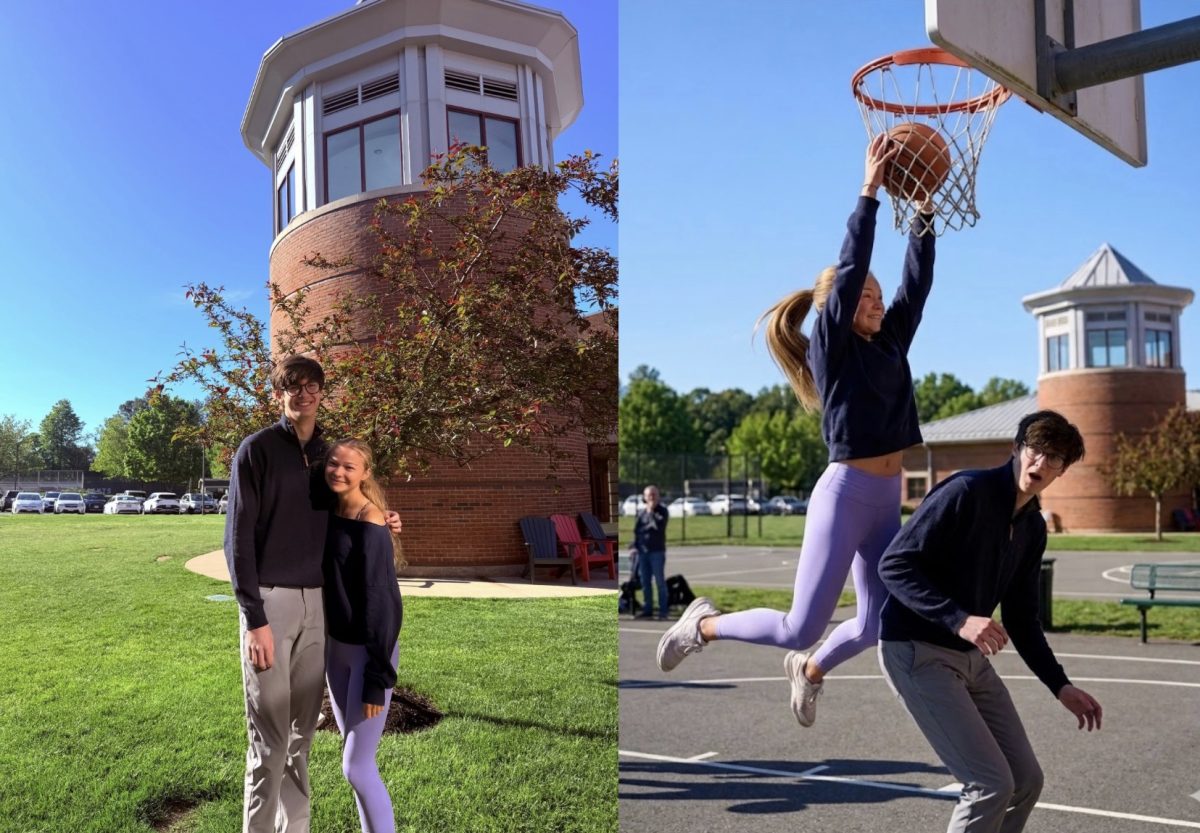
With the rise of Artificial Intelligence in our everyday lives, there seems to be a more sinister rise in a closely related phenomenon: deepfakes. AI generated images, videos, or audio recordings meant to impersonate real people, deepfakes have become increasingly sophisticated with the progression of AI models. While deepfakes can be as innocent as generating a video clip of a friend dancing from just a picture, they can also be more nefarious, such as a criminal getting your picture off instagram and generating a nude image of you for money.
In schools across the nation, administrators have been caught off guard by a sudden rise in cyberbullying incidents involving deepfakes, according to the National Education Association. Such incidents tend to involve students who generate nude images of peers within their school. Once distributed, it becomes incredibly difficult to truly remove such images from the web. Students can share these images with ease from phone to phone.
Dean of Students at SSSAS, Ms. Mcguire, explained that “the problem with images is that they last forever, and it can be hard to track down every last image, and this has happened in my career a handful of times where there’s an image that’s been passed around, and I’m trying to find everybody who might have this image in their phone. And it’s hard because people aren’t always going to be honest. There might be somebody that they sent it to that we don’t know. There’s all kinds of firewalls we can hide stuff behind.”
At a Christian day school in Pennsylvania, two male teenage students were sentenced to probation after being caught with over 300 deepfake images of female students under 18. Such incidents are becoming increasingly common. Dean of Students Ms. McGuire added that one of the most worrisome elements of this trend is the dynamic and rapidly evolving nature of AI applications, which presents challenges to administrators scrambling to respond.
One of the most concerning elements of this growing trend is the mental health effects which deepfake incidents can have. In some of the worst cases of deepfake manipulation, online perpetrators can pull images off the web and generate nude images of victims. Known as “sextortion,” the perpetrator will threaten to post the AI-generated nudes online if the victim doesn’t pay. In such situations, victims are likely worried that the perpetrator would post the photos and the potential reputational damages that would take place.
In 2025, a Kentucky high school student became the target of a financially motivated sextortion case, as reported by WPLN Nashville. Unable to pay the money, he desperately texted friends asking for thousands of dollars. Though described by friends and family as an outgoing, active, and happy teenager, he made a rash decision under the pressure of this financial scheme. Late at night, the student texted his best friend “I love you so much,” before taking his own life.
This tragedy is one of a mounting number that AI has caused, whether it’s a funny photo of your friend that AI creates or a serious photo such as a deepfake nude, it is important to remember the significance of the impact on the other person and yourself, and knowing there is always someone there to help, as Dean of Students, Ms. McGuire made it a point to say, “I feel like so much of our energy would have to go towards supporting the victim, to making sure that we can eliminate any image possible.”
Ms. McGuire also explained that the school is deeply knowledgeable about deepfakes and constantly learning more about AI and its potential for harm, stating, “We are just not at the end point yet. We are very aware of the potential problems; we are talking about it all the time.”
Ms. Dennison, SSSAS health teacher and coach of field hockey and lacrosse, shared her sister’s personal experience of being a victim of a deepfake. Ms. Dennison’s sister is a teacher at a public school in North Carolina, and one of her students took a lacrosse roster picture from a public profile of her sister and then inserted the photo into AI, editing the picture to create a vulgar name on her jersey. The edited photo spread widely across the school. The school in North Carolina did not prioritize this matter until Ms. Dennison’s sister and a colleague of hers had helped fight for accountability in this case.
Researchers at UNESCO studying the adverse effects of AI generated content explained how “deepfakes differ fundamentally from traditional disinformation—they are convincing, scalable, and increasingly accessible. Suspicions of AI generation alone sow doubt.”
For high school students who are fluent in the art of online information sharing, deepfakes have become yet another way of creating content online. Growing up in an atmosphere where there is always a device in someone’s hands can be dangerous when it comes to trusting their insight about deepfakes.
Artificial Intelligence has been adopted by many teenagers. AI varies in countless ways. A student can ask anything from, “Can you make a study guide?” to a request such as, “Can you edit the person in the back of my photo out?” While these questions are innocent, Artificial Intelligence can accept the extreme requests that lead to unacceptable, and irreversible damage. Although AI can reject questions, it will not always do so, varying between models and the specific wording of queries. Artificial Intelligence is not a person, it’s algorithmic and has no inherent judgement that a user of AI should trust.