

















Has the dress code put more distress or delight in our school community? Are the countless infractions points implementing stricter rules or severe punishments on our student body? Are shoulders really that distracting, or are our administrators pushing the limit on what can and cannot be shown during school hours?
This school year, Ms. McGuire and the rest of the deans of students have made a point to enforce the dress code more than in years prior.
“Dress code has always been something that has started out pretty good, but then it gets worse over time,” said Ms. McGuire. “So, Mr. Mallett, Mr. Wong, Mrs. Adams, and I had met last spring and talked about ways we could reinforce it. I’ve worked at schools that are more formal than this and I’ve worked at schools that are less formal than this. I am just doing my job which is enforcing the dress code as a whole.”
Ms. McGuire felt as though the dress code has been very lackadaisical in terms of enforcing it in previous years. Some teachers are very involved in the school’s dress code while other teachers just worry about sticking to their job, which is teaching.
Ms. McGuire thinks that “if we’re going to say it, we need to mean it” and that all teachers and administrators should be on board with the new dress code enforcement.
Ms. McGuire has made an effort to send emails regarding students’ questions about the dress code or things she has noticed. She also sends out reminders of point deductions for our Red vs. Green teams if members get dress coded. Some of the emails are sent in the morning or afternoon, which doesn’t give students the opportunity to go home and change if their attire is out of dress code. One email in particular was sent out on September 25th (Decades Day), at 8:19AM with the subject “Sweatpants today are a problem.”
Sending emails when students are already wearing sweatpants is not very productive, especially if there was no prior communication stating that sweatpants weren’t okay to wear during spirit week. Some students don’t have access to cars to go home to change into other pants, and some students live so far away that they wouldn’t be able to go home to change anyway.
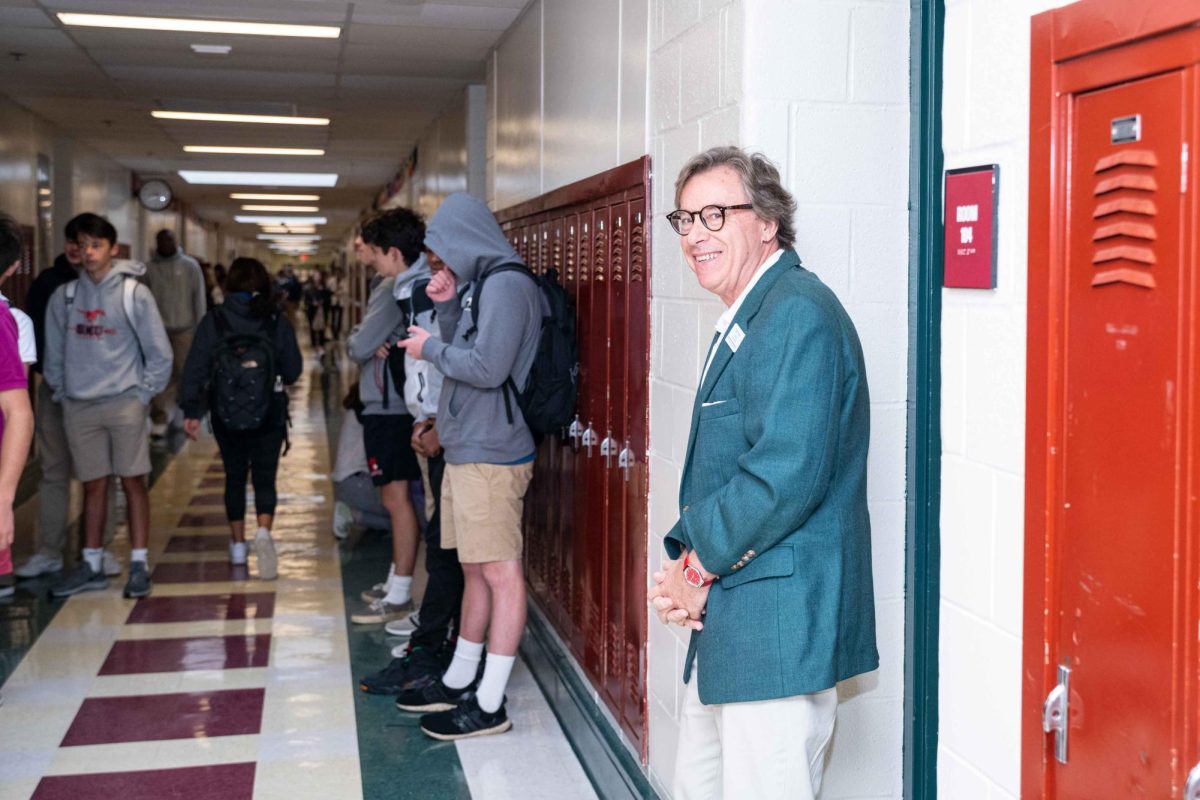
Other times, Ms. McGuire and the rest of the dean of students have stopped students in the middle of the hallway, often making them feel uncomfortable and called out.
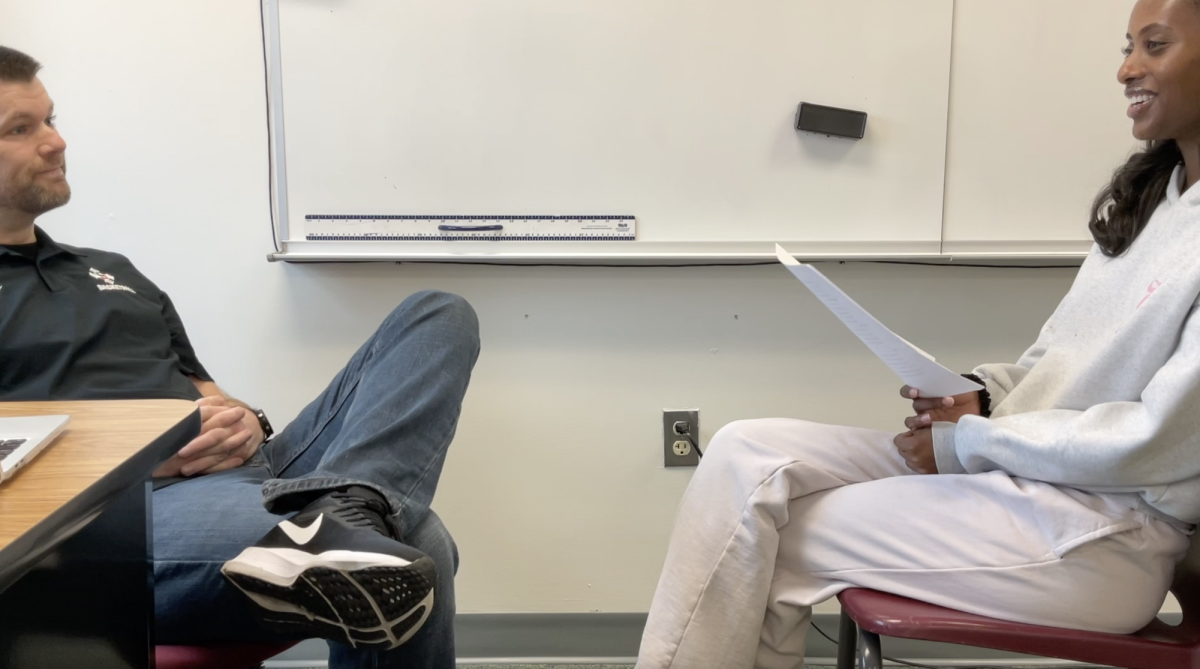
“It’s a very personal thing when someone talks about your clothing choices,” Ms. Nadler, associate dean of students, said during an interview. “Everyone’s reaction to being dress coded will be personal, even when the dress code is impersonal. It affects everyone differently.”
Ms. Nadler explained that some students come to her when they think the exchange of being dress coded between a faculty member and themselves was disrespectful, but Ms. Nadler does try to “explain [to the student] from a faculty’s perspective why someone might have dress coded them.”
She said how students might get irritated by faculty “yelling at them” and dress coding them in front of other students, but it’s also part of the faculty’s job to do so.
But is strictness always the answer to enforcing the school’s dress code?
Out of the 70 responses from a google form sent out to the student body, 71.4% have noticed the stricter and more implemented dress code from years prior, or during their time at the St. Stephen’s and St. Agnes Middle School.
One senior female responded saying that they were “very annoyed” about this year’s dress code, saying how “it’s restrictive and makes many people stressed about what they can and can’t wear. It also sucks to feel worried about being called out in front of a bunch of people.”
A sophomore female thinks the dress code is “a little over the top.” They think that “blue jean skirts are as formal as khakis, especially with the shirts and blouses we wear with them. I also think that wearing black jeans [on chapel days] shouldn’t be considered informal if I’m wearing a nice shirt or something. It’s crazy that all the guys can just buy four pairs of the same brand of khaki pants and yet the girls are more restricted because we feel the need to switch it up sometimes.”
Some students find the rules inconsistent. From being allowed to wear blue denim skirts, but not blue denim jeans to college sweatshirts being okay, but other nice sweatshirts with a bigger logo not being allowed. Charlotte Terwilliger ‘29 finds the dress code overall “a bit too aggressive.”
She continued by saying, “When you walk into school it feels like you’re being judged and that [the administrators] are deciding if your outfit is good enough. It’s scary and not normal.”
Upper School Spanish Teacher and new Associate Dean of Students for ninth and tenth grades Profe Gilbert, said that he hasn’t particularly seen any backlash from the student body regarding the dress code.
“It’s pretty much the same every year,” he explained. “I understand that some things might not be that clear, but the main violations such as sweatpants are pretty easy to understand.”
A junior male agrees, seeing the dress code as “nothing out of the ordinary.”
However, Senior Lindsay Parsont said, “I feel like they haven’t really enforced [the dress code] in other years, and this year they’re really cracking down on it.”
Profe Gilbert has noticed that there is a rise in faculty enforcing the dress code in place. Profe Gilbert’s focus is to “make sure everybody is being held accountable to the standards we set in school.”
He said that it’s a good thing that students are feeling more of an enforcement, because then the teachers are holding themselves accountable for giving students dress code violations instead of letting them off the hook; “It’s good to hear that we’re more united as administrators and teachers are enforcing the rule that we have.”
Profe Gilbert described the violations not as “hunting people down” but more as “accountability to the rules we’ve already set.”
Although the deans’ intentions are not to hunt students down, it doesn’t stop students from feeling like they are being stalked through every hallway of the school, especially during the past spirit days we’ve had at SSSAS.
A female junior said, “They are being stupid by putting so much emphasis on it [the dress code] and it is taking away from spirit days.”
People noted that on Decades Day some senior guys were shirtless under their togas, while still emphasizing on girls having to cover their shoulders with cardigans or sweaters during and midriffs during school hours.
Lindsay Parsont said that “there were girls getting yelled at that day for having their midriffs out, and then there were guys walking around without shirts on.”
Ms. Nadler responded to students’anger, saying that she “100% agrees that shirtless guys wearing togas is not acceptable. I do not think anyone should have to see someone’s bare chest.”
She also thought that “a senior girl wearing a spaghetti strap top under her toga would not have been dress coded that day” despite what’s stated in the dress code.
Ms. McGuire wished that students would have come up to her sooner so she could have resolved the issue at hand. But students wonder, how did not one dean see the issue in guys’ attire, when the whole student body managed to do so?
Although the administration says our dress code is clear and straightforward, there are so many contradicting rules and regulations that work on some days and not others. It was never clear that girls could have worn spaghetti straps to make their togas more realistic. If that was the case, the school would have seen a lot more senior girls in tank tops just like they saw senior boys shirtless. And now students cannot wear sweatpants during spirit week or open-back yoga style shirts during normal days because they are deemed to be inappropriate during school hours, but in reality they make students feel comfortable while learning.
Why are the clothes we wear so important for our education? While it’s important to be presentable, it often feels like we are losing the point. How are students supposed to feel treated equally when so often what they wear, how they appear in what they wear, or what is available to wear, is out of their control?
Our dress code policy should not be seen as “scary” to the student body, but the real scary thing is how our administrators regulate it.