






















Among all of the prominent dopamine raising, parent scaring, questionably legal substances of the 21st century, marijuana, more commonly known as weed, has lived its entire existence in a gray area. Nothing relatively positive has been discovered about its contents, yet its long term side effects are still mostly unknown. The kids today aren’t smoking their parents’ weed, or even their parents’ parents’ weed, but instead an even stronger strain that has dramatically increased in THC (the active ingredient of cannabis.) As new science paves the way for a brighter future so does the kush, going from a measly average 4% Delta 9 in 1995 from DEA seized cannabis to a whopping 12% in 2014.
In D.C., Maryland, and Virginia, cannabis is legal for people aged 21 and up. However, how many weed users are under 21? According to an article from Cannabis and Public Health, in 2022, 30.7% of US high school 12th graders reported using cannabis in the past year, and 6.3% reported using it daily in the past 30 days. The number of teens using cannabis is rapidly growing and is a widespread occurrence. But how does this play out in teen years?
In high school, teens are trying to experience different things to figure out what is best for them while developing into young adults. A lot of these experiences can be highly influenced by the people around them, especially in social settings, and what may seem like something to do for a fun night with friends actually has many other effects that one does not comprehend at that moment of decision. Marijuana alone is already a highly addictive and dangerous drug, but this is even more amplified in the developing teen brain. According to American Addiction Centers, “Marijuana use during adolescence and young adulthood may affect this development and can lead to impaired learning and memory by impacting how the brain builds connections between the areas necessary for these functions.”
The key parts of your brain that are developing the most throughout these years are what controls your impulse, emotions, and decision making, which are all things apart of your frontal cortex. The teen brain has a pathway and time line to development, and when mixing harmful substances into this situation, the pathway suddenly hits a dead end. Teens are already more prone to addiction than adults, and once using drugs like marijuana the long-term effects will change the rest of their lives. According to American Addiction centers, “Cognitive problems, such as problems with attention, concentration, problem-solving, learning, and memory, reduced coordination and reaction time, performance issues at school or work, a greater likelihood of dropping out of school, poor decision-making and judgement, relationship problems, overall lower life satisfaction, Increased risk of depression, anxiety, and suicidal thoughts”
But what sparks the usage of weed? How does what started as a one time thing turn into addiction?
As the story typically goes with substances, it usually starts in a social setting – at a party or a kickback with a few friends. Weed comes in many different forms, such as an edible, a rolled cannabis cigarette, or most commonly amongst teens, a “cart,” which is a small, pre-filled cartridge holding cannabis oil.
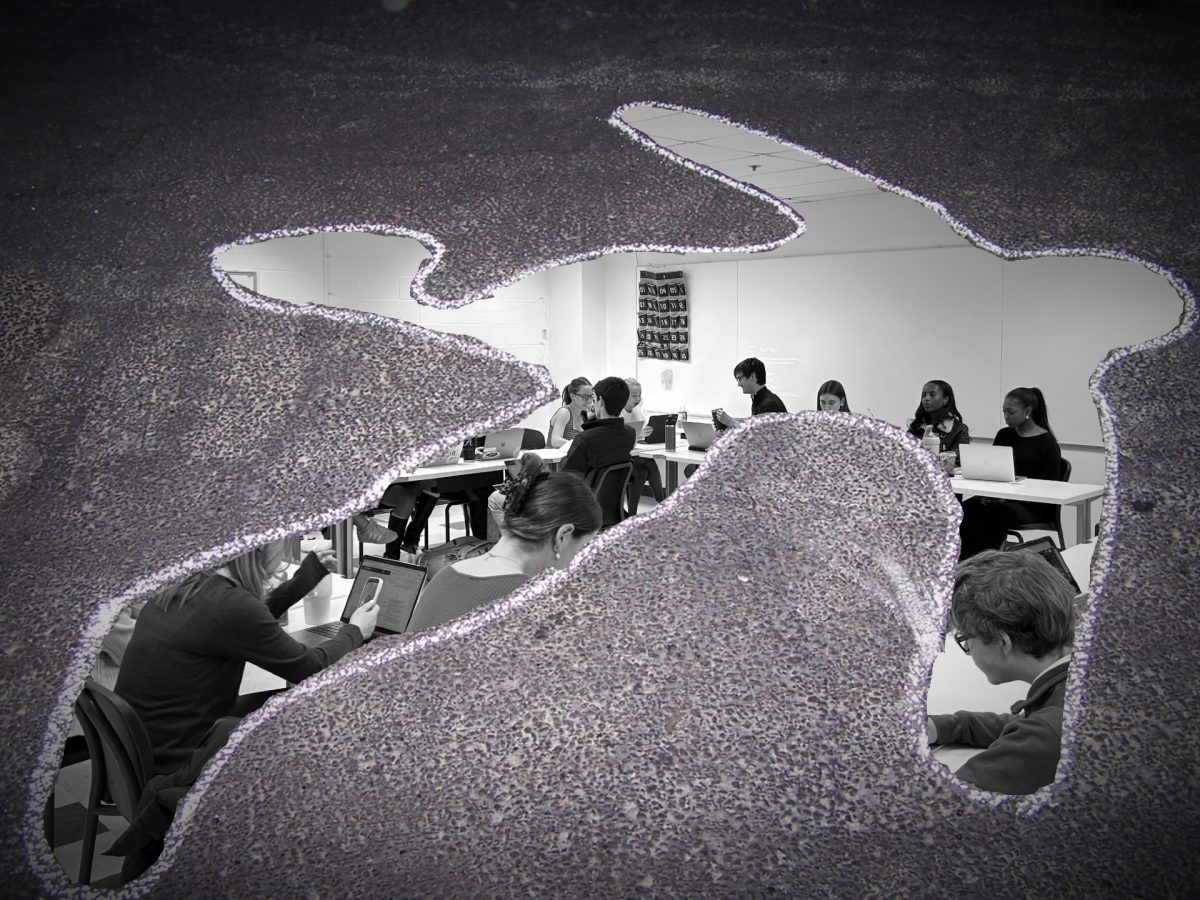
In a form sent to the Upper Schoolers at St. Stephen’s & St. Agnes School, students were asked if they had tried marijuana before, and if they had, what led them to try it?
One anonymous respondent says, “At friends’ parties, just because they had it and it seemed fun.” Another respondent says, “The first time I ever did it was summer of sophomore year and it was just for fun with some friends.” Other anonymous respondents agreed that the first time they tried marijuana was also during sophomore year. Students were also asked if this was a one time thing, or something they started to do more often. Some respondents said that the first time they tried marijuana was also the last.
However, other respondents said that weed has become a regular thing for them, with one person saying, “It started as a one time thing, but a few months later I began to make it a monthly ritual. Over the years it slowly became a regular thing, going from a monthly ritual I’d look forward to, to a normal part of my life. I’d consider myself a regular user, using it an average of twice a week.”
Students’ reactions to using marijuna vary; with some students saying they enjoyed the experience, while others say that they hated it. But for the students who do become hooked by marijuana, why is that?
For some, marijuna is just something that they indulge in socially. However, for others, it is something that they use to calm themselves down. One respondent says, “It helps me relax and fall asleep, and I feel like it’s something I can look forward to at the end of the day.” On a similar note, another respondent says they continued using weed because “it became a habit and I used it whenever I was stressed and needed to relax.”
In an anonymous interview with a student at SSSAS, they say that smoking makes them feel very “light in their body” and start to feel very sleepy, while another student said “it just mellowed me out.”
Some of the anonymous students interviewed said they started using marijuana because they were around family members or older friends who used. They also said that they get their marijuana from friends, cousins, or know people who grow it.
Another anonymous student also added, “The munchies are a very real thing,” meaning that marijuana makes you want to eat everything in sight.
As a society, we have grown accustomed to the usage of different substances. But the begging question remains, why do people do it? What about our bodies makes us crave these substances? A study in Psychology of Addictive Behaviors by researchers at UC Davis Health in 2023 surveyed teens over a six-month period to better understand their motives for using cannabis. The researchers found that teens who have more of a “demand” for cannabis, meaning they are more willing to consume cannabis and have stronger urges to use it, are likely to use it for enjoyment. Using cannabis for enjoyment was linked to using more of it and experiencing negative consequences. Teens who start using cannabis purely for enjoyment were also more likely to use it to cope, or to, “forget their problems.” This also typically results in negative consequences, including trouble remembering things, difficulty concentrating, or acting overly silly or foolish.
Nicole Schultz, first author of the study and an assistant professor in the UC Davis Department of Psychiatry and Behavioral Sciences, says, “We know that earlier onset of cannabis use is associated with the likelihood of developing a cannabis use disorder. It is important we understand what variables contribute to their use so that we can develop effective strategies to intervene early.”
The discussion of different substances is a taboo one, something that people tend to avoid talking about. It is generally accepted that substances, specifically marijuana, is bad for you. But it is important to know what the literal side effects and future consequences are. The article by UC Davis states that the increased use of cannabis is a public health concern, as cannabis can have significant effects on teen health. A study in early 2023 from Columbia University found teens who use cannabis leisurely are two to four times more likely to develop psychiatric disorders, such as depression or suicidality, than teens who do not use cannabis. Teens are also at risk for addiction or cannabis use disorder, where they try but cannot quit cannabis. Just the same as any substance, once someone is addicted, it is extremely hard to quit.
Although some experts agree that for teens whose prefrontal cortexes are still developing, marijuana has an overall negative effect. The group of anonymous students we interviewed at SSSAS all agreed that marijuana should not be criminalized, and some even argued that it has a positive impact on anxiety, sleep, and one said “it just makes everything funnier.”