






















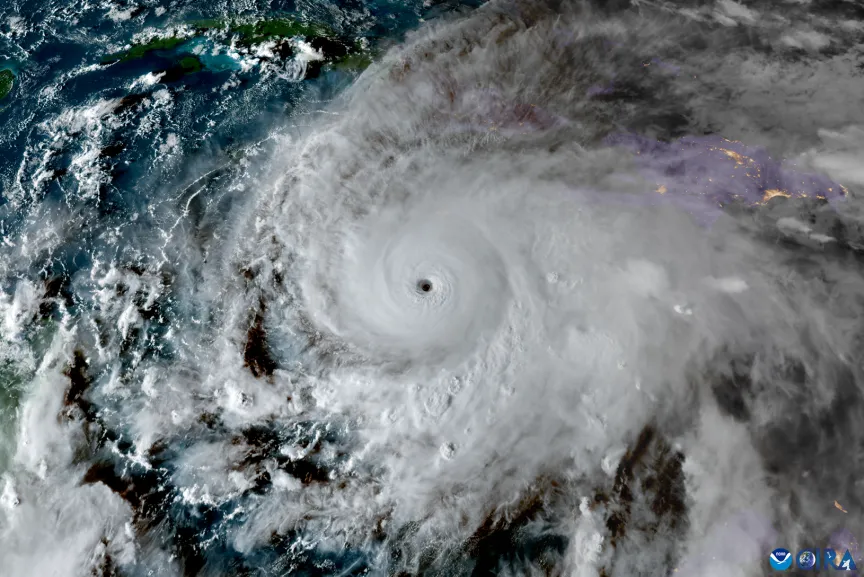
On October 28, a Category 5 hurricane made landfall on a small town in South West Jamaica, called Black River. This hurricane, named Hurricane Melissa, is the fourth major hurricane to hit Jamaica since 1950. With winds up to 185 miles per hour and 45 deaths. With 25,000 people displaced and 360,000 in need of food assistance, Hurricane Melissa is the strongest and most devastating hurricane to hit Jamaica. Every building and home has been destroyed and officials say it could take up to 10 years for Black River to rebuild.
Hurricanes have grown in intensity and frequency substantially in the past 50 years due to the rise in global temperatures. Rising sea levels due to melting ice leads to a higher base for storms and makes it easier for them to travel further inland and cause more damage. The growing humidity also creates more moisture which leads to more intense rain pour. Hurricane Melissa was formed in the central Caribbean where the temperature was 2.5 degrees celcius higher than usual, leading to a strong base for the formation of a hurricane. The strong base of the hurricane made it a significantly stronger hurricane and made it easier for Hurricane Melissa to move further inland and cause significantly more damage.
Different parts of the world are handling the climate crisis differently, and even different administrations in the US government have handled global warming differently. The current Trump administration has enacted legislation that has slowed down the progress to reverse climate change. Trump in an address to the United Nations in September of 2025 called climate change “The greatest con job”, reinforcing his skepticism on global environment initiatives. Mr Yoder, an eleventh grade biology teacher at SSSAS says the first step to trying to reverse the current trajectory of climate change “Is to acknowledge that climate change is real and to acknowledge the contributions of carbon to climate change.” The Trump administration passed the Big Beautiful Bill act in July 2025 that reverses many of the IRA (Inflation Reduction Act) emission reduction goals in the power and transport industry. The Big Beautiful Bill also dismantles sectors of the IRA that work for electric vehicles, reduction of emissions and climate resistance. The current government administration removed the US, on January 20 2025, at the very beginning of Trump’s second term, from the Paris agreement, which is a treaty that was formed in 2015 to combat global warming. There are 194 countries who are a part of this treaty and every five years these countries are required to submit how they are making contributions to combat climate change. The current administration has taken a different approach to climate change rather than the Biden administration prior. The most recent US initiative against climate change was implemented by former president Joe Biden, a US inflation reduction act that addressed climate change by reducing carbon emissions. Since then the United States has taken actions that reverse the progress made by the Biden Administration in terms of attempting to slow down the progress of global warming.
The future effects of actions like the US removal from the Paris Agreement will have eternal consequences to the world’s climate. If the climate continues on the trajectory it is on and the world’s climate exceeds 1.5 degrees Celsius, scientists warn that irreversible destruction to ecosystems and the environment will occur. According to the World Meteorological Organization, there is now an alarming 86% chance that the world’s climate could exceed this critical threshold in the next five years. People around the world are already feeling the effects of the growing climate with extreme heatwaves and natural disasters, hurricane melissa is just one example of the effects of the growing climate on humans. As global warming intensifies, hurricanes will continue to grow and become stronger and more intense, posing extreme risks to coastal communities. Environmental experts express the need for immediate action to reverse the global climate and reduce frequency of disastrous natural disasters. Without fast global cooperation to stop the climate crisis the planet may soon cross a point of no return.